PEVA vs Aluminum Foil Insulated Bags for Daily Food Delivery
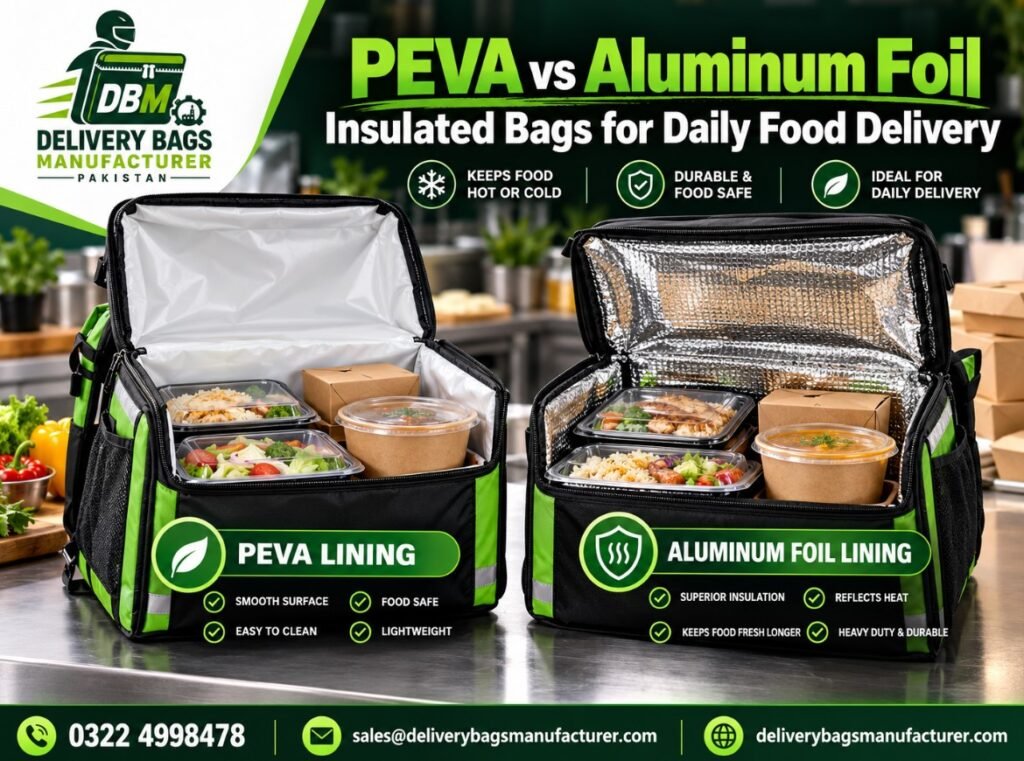
The practical question behind PEVA vs aluminum foil insulated bags is how the proposed carrier will cope with your daily routine. Riders load containers, kitchen staff wipe interiors, and packaging touches the lining on every trip. A material name does not show whether those tasks will be convenient. Inspect the full bag and its care requirements before deciding which construction to buy.
For a restaurant replacing everyday carriers, maintenance and handling questions deserve attention alongside insulation. The best-looking interior may still have corners staff cannot reach or loose folds that catch food boxes. Start with a representative order and observe the way the sample is used. That reveals purchasing questions a catalog image cannot answer.
Identifying PEVA and Aluminum Foil Insulated Bag Linings
PEVA is a common commercial description for polyethylene vinyl acetate lining material. Suppliers may use the label without identifying the exact grade or finished-film construction. Ask what will actually be supplied and request care information for it. The label alone should not be treated as proof of cleaning compatibility or direct food-contact suitability.
A silver “foil” interior also needs identification. The construction might contain actual aluminum foil laminated to supporting layers, or it might use a metallized plastic film. These are different material arrangements despite a similar reflective appearance. Ask the supplier to describe the exposed surface and backing, including any protective film that staff will wipe.
DeliveryBagsManufacturer’s reviewed information describes thermal linings and foam insulation but does not confirm a specific PEVA offering. When reviewing food delivery bags for restaurant dispatch, ask which liner is available for the proposed model. Do not select a material option simply because a comparison article discusses it.
PEVA vs Aluminum Foil Insulated Bags for Daily Tasks
| Material or construction | Practical benefit | Limitation | Suitable use | What the buyer should verify |
| PEVA liner | Flexible inner film surface | Exact grade and seams vary | Packaged meals where handling checks pass | Cleaning method and finished-film identity |
| Foil laminate liner | Reflective layer in a supported build | Edges and bonding require inspection | Carriers with a verified laminate specification | Exposed surface, backing and care instructions |
| Metallized film liner | Silver surface on plastic film | Appearance can be confused with foil | Bags designed for the named film construction | Substrate and protection against routine wear |
| Complete insulated bag | Combines liner, foam and closure | No universal retention time follows from the label | Defined delivery routes and packaged orders | Fit, daily access and relevant performance evidence |
Use the comparison to ask better questions, not to assume a fixed winner. A well-made carrier with one liner may be easier to maintain than a poorly assembled carrier with another. Your team should assess the seams, opening and inserts together with the exposed surface.
Food Delivery Bag Lining and Packaging Contact
Load the sample with sealed containers, outer takeaway bags and cup holders used by your kitchen. Observe whether packaging edges snag the liner or push it into folds. Check the base corners and the area just below the closure. Repeat removal in the normal sequence instead of simply placing one box inside for a photograph.
Inspect the effect of structural components on usable space. Frames, panels and dividers should not create unexpected obstructions around the order. If staff must tilt a container to get it through the opening, revisit the layout before choosing the liner. A different material will not necessarily solve an access problem caused by the bag’s shape.
For flat-box deliveries, compare pizza delivery bags for boxed orders rather than forcing every order into a tall backpack. Ask whether the packaging remains supported during the intended carrying routine. Keep each format’s approved order arrangement clear for staff.
Thermal Bag Cleaning and Interior Access
Ask the supplier how the complete bag should be cleaned and dried. A liner may look easy to wipe while the surrounding seams or supports retain inaccessible dirt. Open the sample fully and assess whether hands and approved cleaning tools can reach all relevant areas. Review inserts separately if they are intended to be removable.
Do not assume either PEVA or a foil-type lining can be machine washed. Water, heat or cleaning chemicals may affect components differently, including adhesive bonds, padding and structural panels. Request instructions applying to the model you will buy. If those instructions conflict with your current routine, resolve the mismatch before ordering.
Insulated Delivery Bag Materials and Moisture Protection
Moisture may come from condensation, a spilled drink or damp packaging. Inspect whether the interior allows staff to locate and clean affected areas. A liner material description cannot establish that the finished bag is leakproof. Seams, stitching, joins and openings all need consideration.
Likewise, a reflective inner surface does not prove that rain will stay outside the carrier. Assess outer fabric, closures and the full construction separately. Define the expected exposure and ask what evidence supports weather-related claims. Buyers comparing rider delivery bags for daily operations should evaluate the carrier as a complete assembly.
Avoid solving condensation by adding uncontrolled openings. Ventilation changes the environment around packaged food and may influence temperature retention. If moisture or food texture is a recurring problem, evaluate the bag together with the packaging and dispatch routine. Record the conditions of the trial so the result can inform a consistent operating method.
Food Delivery Bag Lining and Thermal Performance
A foil-type surface can influence radiant heat transfer under suitable conditions, while insulation and the surrounding construction also matter. That mechanism does not create a universal delivery-time promise. Ask for complete-bag evidence rather than accepting the idea that silver lining automatically keeps every meal hot longer. Evaluate the proposed configuration against the work it needs to perform.
For a meaningful assessment, record starting conditions, packed load, ambient conditions, opening frequency and measurement method. Compare results with the same operating assumptions where practical. A bag opened at several stops faces different conditions from one kept closed throughout a trip. These differences should be visible in any evidence you use for purchasing.
Insulation is only part of food temperature management. Staff still need appropriate food preparation, packaging and handling procedures. A warm exterior or a quick touch of the liner does not establish that the food meets the operation’s required temperature conditions. Do not replace those procedures with an advertised retention time.
Liner Wear and Daily Condition Checks
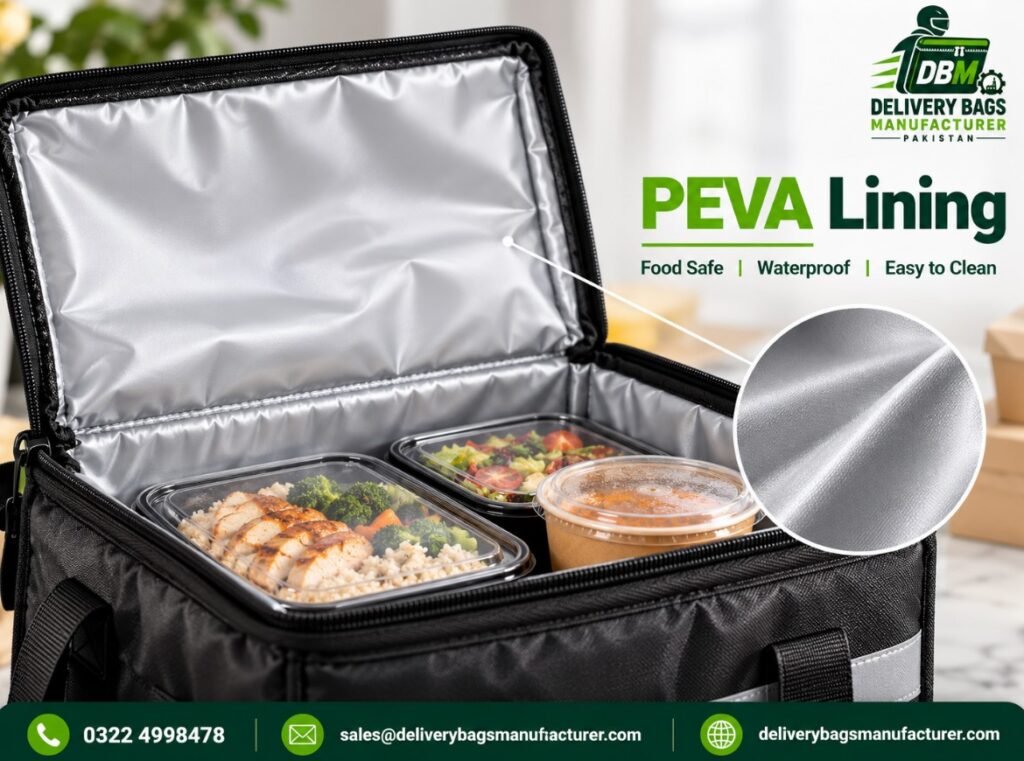
Create a simple condition review linked to the bag model and care instructions. Staff should know what needs reporting instead of ignoring damage until it interferes with dispatch. Check these areas during the review:
Torn lining, exposed backing or areas separating from their support.
Loose inner folds that catch boxes or obstruct cleaning.
Seams, joins and corners that cannot be cleaned as instructed.
Closure faults that prevent the bag from closing normally.
Damaged inserts, handles or straps affecting the intended use.
Material changes compared with the approved reference bag.
This checklist is an inspection aid, not a claim about failure rates for either material. Decide repair or replacement criteria with the supplier and responsible operations team. Keep damaged carriers out of uses they can no longer support as specified. Replacement decisions should concern the whole bag, even when the liner is the first visible problem.
Insulated Delivery Bag Maintenance and Replacement Cost
A lower initial price may be useful, but compare it with the care and replacement needs observed in your operation. Record when each bag enters service, reported problems, repairs and replacements. Compare equivalent models under similar use. Do not assign a predicted lifespan to PEVA or foil merely because the label sounds more durable.
An illustrative restaurant could trial two available liner constructions while holding the bag format and routine as similar as possible. Staff would record loading problems, cleaning effort and visible wear against each sample. The restaurant would then review any differences before ordering more units. This is a suggested assessment process, not evidence that either material wins in all restaurants.
If you are replacing a fleet, request bulk insulated delivery bag orders with the approved construction identified. Ask whether the next batch will use the same lining, backing and inserts. Consistency makes the maintenance comparison more useful than switching materials unnoticed between purchases.
Frequently Asked Questions about Food Delivery Bag Linings
Which lining is easier to clean?
Assess the exact surface and assembled interior rather than selecting by name. Accessible corners, removable parts and suitable care instructions make a practical difference. Ask the supplier what products and methods are permitted. Try the instructed process on the sample before expecting staff to use it every day.
Does aluminum foil lining always last longer?
No general lifespan can be assigned from the label. Backing, bonding, seam design, packaging contact and daily care affect the finished construction. Review relevant evidence and trial the proposed bag under your routine. Track wear in actual use before making a replacement-cost comparison between models.
Can uncovered food sit directly against PEVA?
Do not assume suitability for that contact. Ask for documentation applying to the exact material, intended food and use conditions, and have the relevant requirements reviewed. A carrier intended for sealed takeaway boxes does not automatically serve as a direct food-contact container. Keep its intended role clear.
What should we do when the lining begins to peel?
Report the condition and assess the bag against your maintenance and acceptance criteria. Check whether exposed backing, loose pieces or inaccessible areas prevent proper use and cleaning. Ask the supplier about permitted repairs. Do not improvise an inner patch without reviewing its suitability for the complete carrier.
Can the liner be replaced without buying a new bag?
That depends on the model’s construction and supplier service options. A removable insert is different from a sewn or bonded liner. Confirm replacement availability, installation requirements and any effect on fit or performance. The reviewed website information does not establish a universal liner replacement service.
Should every bag in the fleet have the same lining?
Consistency helps when bags perform the same task, but different uses may justify different builds. Record the liner and care procedure by model. Test each proposed configuration with its own packaged orders. Staff should know which model to use instead of treating all insulated bags as interchangeable.
Conclusion: PEVA vs Aluminum Foil Insulated Bags for Daily Use
Choose the lining through the work your staff perform each day, including loading, wiping, drying and inspection. A complete sample and confirmed care instructions provide a firmer purchasing basis than a material label or reflective appearance alone.
Send your sealed packaging dimensions, daily handling routine and care requirements through insulated delivery bag lining and quotation inquiry. Ask which lining constructions are available and request suitable sample information. Compare PEVA and foil-type options through a complete carrier your team can load, maintain and inspect consistently.