How to Choose Grocery Delivery Bags for Professional Rider Fleets
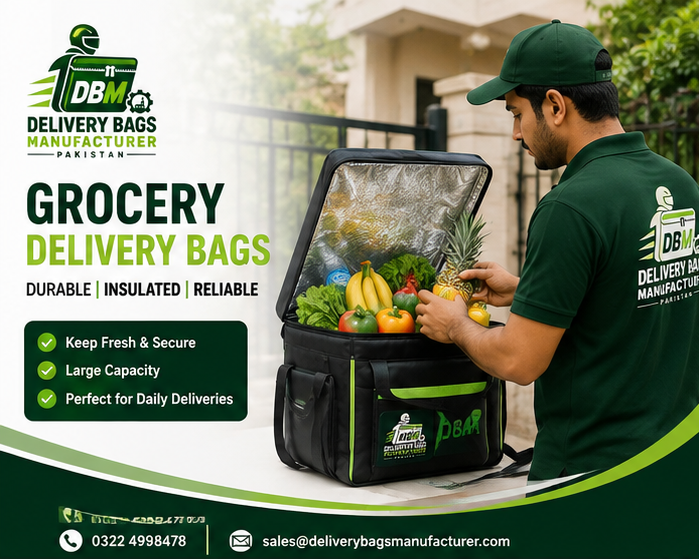
Online grocery shopping has expanded rapidly as supermarkets, minimarts and independent stores offer home delivery alongside physical retail. This growth has created demand for professional grocery delivery bags capable of carrying mixed products in a structured and organized manner.
Grocery orders are different from restaurant meals because one basket can include bottles, vegetables, packaged foods, dairy products and household goods simultaneously. Businesses can compare Grocery Delivery Bags before deciding on capacity, load support, material and branding.
The live grocery page itself targets grocery stores, delivery apps, supermarkets, minimarts and online grocery startups, with custom sizes, waterproof materials, insulation, rider backpacks and bulk manufacturing all positioned as relevant commercial options.
Why Grocery Delivery Needs Specialized Bags
A grocery order can be large even when individual products are small. Multiple items quickly create significant volume and may place substantial pressure on the base, handles and straps.
A professional grocery rider bag provides defined internal capacity and can help keep the order together during transportation.
Unlike disposable shopping bags, reusable commercial carriers are designed around repeated rider use and can become standardized equipment across supermarket or delivery-app fleets.
How Grocery Bags Differ From Restaurant Bags
Restaurant deliveries primarily use standardized meal boxes, while grocery orders vary much more in shape and weight.
A supermarket rider may simultaneously carry milk cartons, bottled drinks, snack packets, vegetables and cleaning products. This means structural support can be just as important as insulation.
Businesses offering both prepared meals and grocery delivery should compare Food Delivery Bags as a separate category rather than assuming one design will serve both equally well.
Main Features Grocery Businesses Should Compare
Before ordering, buyers should evaluate:
- Usable capacity for common grocery baskets
- Strong base, handles and reinforced stitching
- Water-resistant PVC, tarpaulin or coated material
- Suitable frame for heavier mixed loads
- Insulation where selected products need protection
- Custom logo printing and bulk-order capability
These factors help procurement teams compare commercial products based on real operational requirements rather than appearance alone.
Choosing the Correct Grocery Bag Capacity
Capacity should be based on order data from the business. Supermarkets can review a sample of recent online orders and estimate the volume commonly carried by one rider.
Smaller minimarts may only need medium grocery delivery backpacks, while supermarkets handling family shopping baskets may need significantly larger options.
The site also supports custom-size manufacturing, allowing buyers to specify dimensions where standard sizes do not suit their common order profiles.
Heavy-Load Grocery Delivery Bags
A major challenge with grocery delivery is that weight can become high before a bag reaches its full volume.
Bottles, flour, canned goods and milk packs create concentrated loads. A heavy-duty grocery delivery bag therefore requires strong stitching, reinforced attachment points and suitable structural support.
Businesses should not interpret a large bag as automatically suitable for heavy items. Construction quality should be assessed separately from physical dimensions.
Waterproof Grocery Bags for Motorcycle Riders
Rain can damage paper packaging, cartons, bakery products and other grocery items. Motorcycle riders are particularly exposed because their equipment is not protected inside a vehicle.
A waterproof grocery delivery bag or strong water-resistant design provides an additional outer barrier against rain and road spray.
The live product page specifically lists PVC, tarpaulin and coated rexine as relevant waterproof options, while noting that zipper coverage and stitching style also affect final performance.
Tarpaulin Grocery Delivery Bags
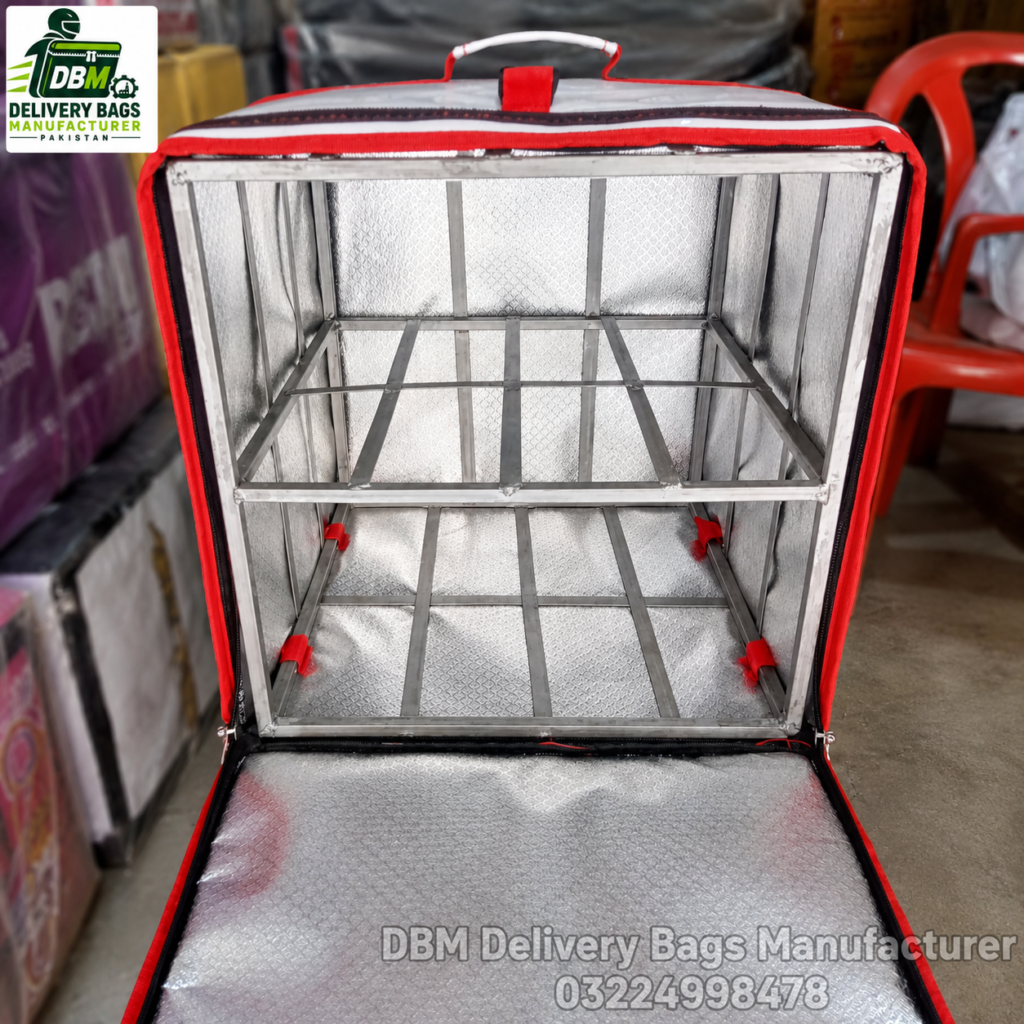
Tarpaulin can be useful for operations that prioritize durability and weather resistance. Its coated surface is particularly relevant for high-use rider fleets.
A tarpaulin grocery bag may suit supermarkets handling frequent urban deliveries throughout changing weather conditions.
However, procurement teams should also consider total bag weight, frame specification and rider comfort when selecting a heavier-duty material.
PVC and Rexine Grocery Bags
PVC can provide a clean, wipeable external surface and can work well for professional grocery branding.
Rexine provides another commercial appearance and may suit businesses seeking a balance between presentation, maintenance and cost.
Different material options allow supermarkets to create standard and premium equipment levels according to route intensity and budget.
Parachute Grocery Bags
Parachute fabric may provide a lighter and more economical alternative for lower-intensity delivery operations.
A parachute grocery delivery bag can be suitable where businesses want lower weight and do not require the same level of rugged outdoor performance as heavy tarpaulin equipment.
Stitching, frame and base strength should still be evaluated carefully because groceries can create substantial loads even in a lightweight outer fabric.
Insulated Grocery Delivery Bags
Some grocery orders contain dairy products, desserts or other items that may benefit from reduced temperature exposure.
An insulated grocery delivery bag uses foam and lining to slow temperature exchange during transportation.
The live page currently identifies insulation as one of the available customization factors for commercial grocery buyers.
For products requiring strict regulated cold-chain conditions, businesses should use appropriate specialist transport systems rather than relying solely on ordinary bag insulation.
Separating Heavy and Fragile Products
A strong grocery bag cannot compensate for poor order packing. Heavy bottles should not be placed directly on top of bread, vegetables or other fragile products.
Stores should establish loading procedures that separate heavy, fragile and leakage-prone items.
For larger orders, using more than one bag can sometimes be safer and easier for the rider than overloading a single extra-large carrier.
Grocery Delivery Bags for Supermarkets
Supermarkets may need more than one bag format because customer orders vary greatly.
A small convenience order may fit into a medium backpack, while a large household basket could require multiple bags. Maintaining several standardized sizes can help staff match equipment to the order.
The goal should be efficient capacity rather than automatically issuing the largest supermarket delivery bag available.
Delivery Bags for Online Grocery Apps
Online grocery platforms depend heavily on rider visibility and operational consistency.
A branded online grocery delivery bag can display the application logo while helping customers identify the rider at the point of delivery.
Platforms operating across several stores or fulfillment locations should standardize dimensions and artwork so new riders can receive matching equipment.
Custom Logo Grocery Delivery Bags
Supermarkets and delivery apps can use rider equipment as a mobile branding channel.
A custom logo grocery bag may include the business name, logo, website, app name, phone number or QR code depending on the design.
Businesses can explore Custom Logo Delivery Bags when preparing branded fleet equipment.
The website currently positions custom logo manufacturing as a core service for grocery businesses and other commercial delivery teams.
Grocery Delivery Bags for Motorcycle Fleets
Motorcycle riders need equipment that balances capacity with manageable dimensions.
An excessively wide or poorly structured bag can become difficult to handle, while a bag that is too small may require additional journeys.
Businesses can compare Rider Delivery Bags when rider comfort and carrying design are major priorities.
Bulk Grocery Delivery Bags for Growing Businesses
Supermarket chains and delivery applications often need bags for many riders simultaneously.
A bulk grocery delivery bag order allows the company to standardize material, dimensions, logo placement and frame construction across the fleet.
The site’s current bulk-order process asks buyers to select bag type, size, material and printing, approve quotation and artwork, and then move into production and quality checking.
Businesses can use Bulk Order Delivery Bags when planning fleet quantities.
Wholesale Grocery Bags for Resellers
Retail-equipment suppliers and delivery-product distributors may want grocery bags for resale rather than direct operational use.
These businesses should maintain a focused selection of common sizes and use custom production for unusual requirements.
The Wholesale Delivery Bags category provides a more suitable internal pathway for traders and distributors.
Planning Spare Inventory
Grocery operations should include spare bags when calculating fleet requirements.
Equipment may occasionally need cleaning, repair or replacement, and rider numbers can increase quickly during promotional periods.
Maintaining matching spare stock reduces the need to introduce generic bags that do not align with the company’s standard design.
Cleaning Grocery Delivery Equipment
Grocery carriers can collect dust, condensation and spills from damaged packaging.
Wipeable internal and external materials can simplify routine cleaning. Bags should be dried fully before returning to service.
Regular maintenance also helps store managers identify zipper damage, worn straps and compromised stitching before a failure occurs.
Quality Checks for Grocery Bags
The live grocery page states that quality checks focus on stitching, zipper movement, strap strength, frame shape, logo placement, finishing and packing.
These areas are particularly important for grocery operations because heavier loads can expose weak construction more quickly.
Corporate buyers should keep an approved sample or detailed specification when planning repeat production.
Comparing Cost and Long-Term Value
The website’s grocery page currently shows quantity-based pricing examples where per-unit pricing falls across larger 1–10, 11–50 and 51–100 piece tiers, although actual pricing varies by material, frame, printing and customization.
This illustrates why grocery buyers should compare total specifications rather than asking only for the cheapest unit.
A stronger commercial grocery delivery bag may deliver better long-term value when equipment is used daily under heavy loads.
Final Thoughts
The best grocery delivery bags in Pakistan should reflect real basket volume, expected load weight, rider conditions and branding requirements.
Capacity, reinforced construction, water resistance, frame quality and optional insulation all play important roles. Grocery businesses can also connect supporting informational content through the Delivery Bags Manufacturer Blog to strengthen both buyer education and industry-specific SEO relevance.
Frequently Asked Questions
1. What is the best delivery bag for grocery businesses?
A strong, appropriately sized and water-resistant bag is generally suitable, but the exact specification depends on basket size, load weight and rider method.
2. Are grocery delivery bags waterproof?
Water-resistant options are available in PVC, tarpaulin and coated materials, although seams, zippers and closures also influence performance.
3. What size grocery delivery bag should a supermarket use?
Analyze typical customer basket sizes and select medium, large or custom dimensions according to real delivery requirements.
4. Can grocery bags carry heavy products?
Yes, provided the bag includes suitable base reinforcement, stitching, straps and frame construction for the intended load.
5. Are insulated grocery delivery bags available?
Yes. Insulation can be added for selected products where reducing temperature exchange during transport is useful.
6. Can supermarkets print logos on grocery delivery bags?
Yes. Custom branding can include logos, websites, phone numbers, QR codes and other approved business details.
7. Are grocery bags suitable for motorcycle riders?
Yes. Rider-oriented configurations can include shoulder straps, structural frames and practical carrying dimensions.
8. Can grocery businesses order bags in bulk?
Yes. Bulk production is suitable for supermarkets, minimarts, grocery apps and multi-branch retail businesses.
9. What material is best for heavy grocery delivery?
Tarpaulin or other strong coated materials may suit demanding applications, but construction quality and frame strength remain equally important.
10. Should supermarkets keep different bag sizes?
Yes, where order profiles vary substantially. Several standardized sizes can be more practical than using one oversized bag for every delivery.