How to Choose the Best Grocery Delivery Bags for Commercial Use
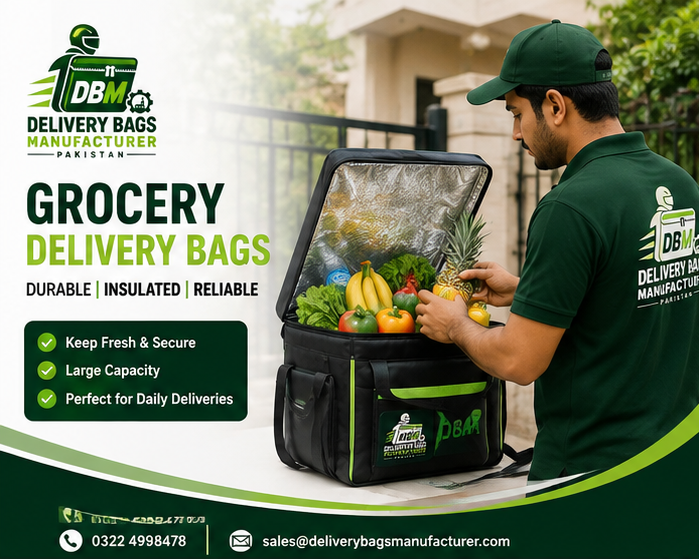
Online grocery ordering has transformed how supermarkets, minimarts and independent stores reach customers. A professional grocery delivery bag gives riders a practical way to transport mixed orders containing packaged goods, produce, bakery products, bottles and selected chilled items.
Grocery transport creates different challenges from restaurant food delivery because orders can be larger, heavier and more varied. Businesses can compare suitable Grocery Delivery Bags when planning bag capacity, material, insulation, structure and branding for commercial operations.
Why Grocery Delivery Requires Specialized Bags
A typical grocery basket may include milk cartons, bottles, vegetables, snacks, canned foods and fragile bakery items at the same time. This creates significant variation in size, weight and handling requirements.
A structured grocery delivery backpack can help organize the load and reduce unnecessary movement while the rider is traveling. Stronger materials and reinforced carrying points are particularly important when orders contain multiple heavy products.
For stores running frequent deliveries, dedicated bags also make rider operations more predictable because staff understand what capacity and load each bag is designed to handle.
Grocery Bags Versus Standard Food Delivery Bags
Restaurant deliveries generally involve prepared meals packed in standardized containers. Grocery orders can contain dozens of products with different shapes, temperatures and weights.
This means grocery delivery bags often need more internal volume and stronger load support than a typical meal-delivery bag. They may also need to handle cartons and bottles that place concentrated pressure on the base.
Businesses handling both grocery and prepared meals can compare Food Delivery Bags rather than attempting to use one configuration for every order type.
Key Features Commercial Grocery Buyers Should Evaluate
Before approving grocery bags, procurement teams should compare:
- Medium, large or XL capacity based on average basket size
- Reinforced stitching, base and carrying handles
- Water-resistant PVC, tarpaulin or suitable outer material
- Insulation for selected dairy or temperature-sensitive products
- Strong frame and comfortable rider carrying system
- Custom logo printing for supermarkets and delivery apps
These factors should be documented before quotations are requested so suppliers can price equivalent specifications.
Choosing Grocery Bag Capacity
Capacity should be planned around real customer baskets rather than guesswork. Businesses can study a sample of common online orders and identify the approximate dimensions and weight riders transport most frequently.
A small convenience store may only require medium-sized grocery rider bags, while a supermarket serving family orders may need large or XL configurations.
Oversizing should still be avoided where possible. A bag that is much larger than the order can allow bottles and cartons to move excessively unless internal organization is provided.
Planning for Heavy Grocery Loads
Weight is as important as volume. A bag containing bottled drinks, flour, milk and canned foods can become heavy even if it is not completely full.
Reinforced stitching should therefore be considered at handles, shoulder straps and base seams. The structural frame should also be appropriate for the anticipated load.
Commercial buyers should ask about both bag dimensions and recommended usage because a large physical size does not automatically mean the construction is suitable for heavy daily grocery loads.
Best Materials for Grocery Delivery Bags
PVC and tarpaulin are useful materials for demanding grocery operations because they can provide durable, wipeable and water-resistant external surfaces.
Tarpaulin grocery bags can suit motorcycle fleets exposed to rain and rough handling. PVC may provide a clean professional appearance and practical maintenance characteristics.
Rexine and parachute fabric can also serve selected commercial requirements where budget, weight or visual presentation is prioritized differently.
The final choice should reflect delivery frequency, weather exposure and load conditions rather than material name alone.
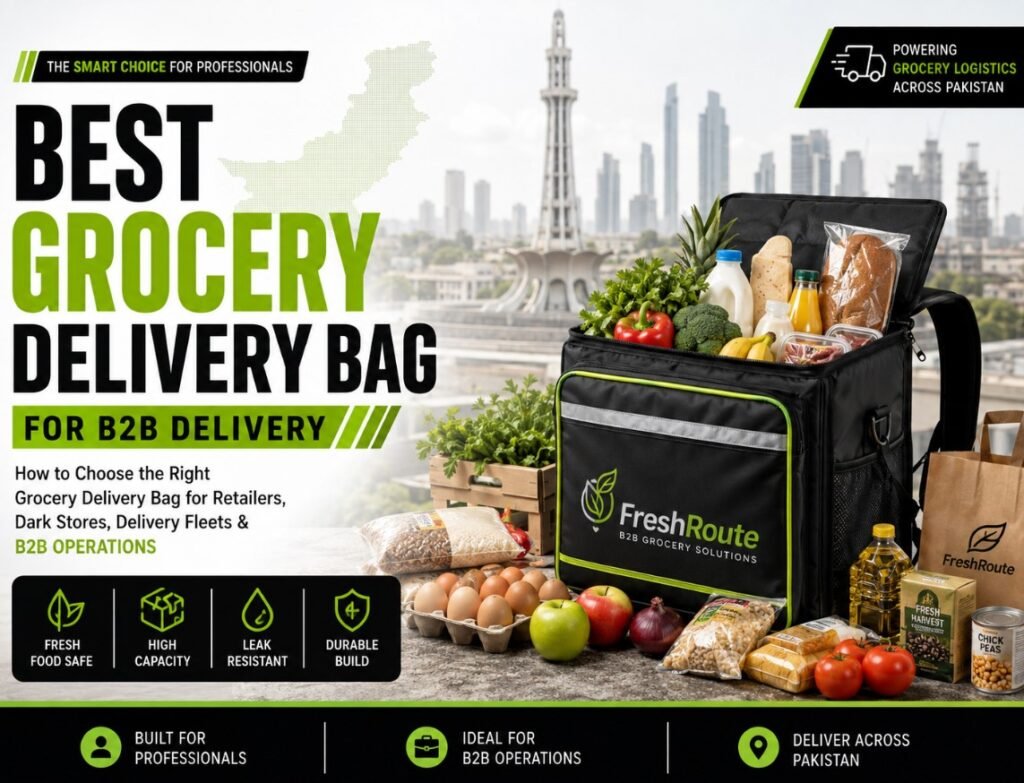
Waterproof Grocery Bags for Motorcycle Delivery
Groceries often contain cardboard cartons, paper packaging and bakery products that can be damaged by moisture. Motorcycle riders also have less protection from rain than enclosed delivery vehicles.
A waterproof grocery delivery bag can provide a useful barrier against road spray and changing weather conditions. The effectiveness depends on the full design, including seams, zipper protection and closure arrangement.
Companies operating dedicated motorcycle fleets should also compare Rider Delivery Bags when evaluating carrying comfort and frame requirements.
Insulated Grocery Delivery Bags
Not every grocery product needs thermal protection, but some orders include dairy items, desserts, selected chilled foods or other products that benefit from reduced temperature exposure.
An insulated grocery delivery bag can slow external temperature transfer during the journey. Foam and lining specifications should be selected according to product type and typical delivery time.
Insulated transport equipment does not replace proper cold-chain systems where regulated temperature control is required. Businesses should distinguish routine grocery delivery from products requiring validated temperature conditions.
For medicine-related orders, dedicated Pharmacy Delivery Bags should be considered separately.
Separating Mixed Grocery Products
One of the biggest challenges in grocery delivery is preventing heavy products from damaging lighter items. Bottles and canned goods should not crush bakery products, produce or fragile packaging.
Businesses should consider how staff pack each order before selecting bag dimensions. Multiple bags or internal separation may be more practical for large orders than putting everything into a single oversized carrier.
Training riders and store staff in consistent loading procedures can be just as important as selecting a durable bag.
Grocery Delivery Bags for Supermarkets
Supermarkets often have higher average basket values and more varied orders than smaller grocery stores. Their supermarket delivery bags may therefore need larger capacity and stronger carrying construction.
A supermarket should analyze peak-order volumes as well as normal days. Weekend or promotional orders may be significantly larger than everyday deliveries.
Maintaining more than one bag size can allow staff to match equipment to actual orders rather than always issuing the largest available carrier.
Delivery Bags for Online Grocery Apps
Online grocery platforms may operate centralized fulfillment facilities or partner with many independent stores. In either model, standardized rider equipment can improve brand visibility.
A consistent online grocery delivery bag gives riders a recognizable appearance when arriving at customers’ homes. The bag can display a platform logo, website or other approved branding.
Because these businesses may recruit riders frequently, the design should also be easy to reproduce in later manufacturing batches without major changes.
Custom Logo Grocery Delivery Bags
Delivery bags travel across a company’s service area throughout the day. This makes them valuable surfaces for repeated brand exposure.
A custom logo grocery bag can feature supermarket, minimart or application branding. Businesses can plan logo size and placement according to the selected fabric and printing technique.
For dedicated branding requirements, buyers can review Custom Logo Delivery Bags before finalizing artwork and production quantities.
Consistent colors and logo positioning become especially valuable for businesses operating multiple branches.
Rider Comfort and Grocery Load Balance
Grocery deliveries can place more strain on riders than lightweight restaurant orders. The bag should therefore be assessed when loaded rather than only when empty.
Strong shoulder straps and stable frame construction can help keep the load more predictable. Businesses should avoid creating bags so large that riders are encouraged to exceed practical carrying limits.
A well-designed grocery rider backpack should balance useful capacity with manageable dimensions for motorcycle movement and routine customer deliveries.
Bulk Grocery Bags for Chains and Apps
Supermarket chains, grocery applications and franchises may require dozens or hundreds of bags across multiple locations. Standardized purchasing can simplify replacement and fleet expansion.
A bulk grocery delivery bag order can use one approved specification covering dimensions, material, stitching, frame, insulation and artwork.
Companies planning commercial quantities can compare Bulk Order Delivery Bags before arranging production.
Procurement teams should also include spare inventory in quantity planning because bags may periodically require cleaning, repair or replacement.
Wholesale Grocery Delivery Bags
Distributors supplying delivery equipment to retail stores may require wholesale grocery bags in larger quantities. These buyers should determine whether their customers prefer standard neutral designs or customized branding.
Common dimensions and materials can simplify inventory management, while custom production can support private-label or corporate requirements.
Businesses buying for resale can explore Wholesale Delivery Bags for a procurement path more suitable to repeat commercial quantities.
Quality-Control Checks for Grocery Bags
Grocery bags should be inspected carefully because heavy loads can expose weaknesses quickly. Stitching around handles and shoulder straps deserves particular attention.
Zippers should operate smoothly, and the frame should remain appropriately aligned after loading. Internal lining and insulation should also be checked for consistent installation where these features are included.
Custom logo orders should be compared against approved artwork before bags are distributed to stores or riders.
Managing Bag Cleaning and Hygiene
Grocery bags can come into contact with dust, spilled liquids, food residue and condensation. Smooth internal surfaces can simplify routine cleaning.
Staff should follow cleaning instructions suitable for the selected material and allow bags to dry properly before reuse. Persistent damage or contamination can indicate that a bag requires replacement.
Regular inspection can also reveal worn straps, damaged seams or zipper problems before they interrupt rider operations.
Evaluating Total Cost for Grocery Delivery Fleets
Procurement teams should compare more than the initial price per bag. A cheaper product may require more frequent replacement when exposed to heavy grocery orders.
Durability, expected usage and replacement frequency contribute to total cost of ownership. Businesses should therefore track bag performance across normal commercial operations.
More buying and product-selection topics can be connected through the Delivery Bags Manufacturer Blog to strengthen customer education and website topical authority.
Final Thoughts
The best grocery delivery bags in Pakistan should be selected according to basket size, average load, rider method and weather exposure. Strong handles, reinforced stitching, practical capacity, water resistance and suitable structural support can all influence performance.
Supermarkets, minimarts and online delivery platforms should define specifications before ordering in quantity. Professionally manufactured custom grocery delivery bags can support safer order handling while also creating consistent brand visibility across a commercial rider fleet.
Frequently Asked Questions
1. What is a grocery delivery bag?
A grocery delivery bag is a reusable commercial carrier designed to transport supermarket, minimart and online grocery orders between stores and customers.
2. What size grocery delivery bag should I choose?
Study the dimensions and weight of common customer orders. Medium, large or XL bags can then be selected according to actual basket requirements.
3. Which material is best for grocery delivery bags?
PVC and tarpaulin are useful for demanding water-resistant applications, while rexine and parachute fabric can suit other commercial requirements.
4. Are grocery delivery bags waterproof?
Water-resistant configurations are available. Overall protection depends on material, stitching, zipper coverage and closure design.
5. Do grocery delivery bags need insulation?
Insulation can be beneficial for selected dairy, chilled or temperature-sensitive grocery items, depending on delivery time and product requirements.
6. Can supermarket logos be printed on delivery bags?
Yes. Custom logo manufacturing can support supermarkets, grocery stores, minimarts and online delivery platforms.
7. Are grocery bags suitable for motorcycle riders?
Yes. Commercial grocery backpacks can be manufactured with suitable shoulder straps, frames and carrying capacity for motorcycle delivery.
8. Can grocery delivery bags carry bottles and cartons?
Yes, provided the bag has appropriate capacity, reinforced construction and load strength. Heavy products should also be packed to protect fragile items.
9. Can supermarket chains order grocery bags in bulk?
Yes. Bulk production helps chains standardize dimensions, materials and branding across branches and rider teams.
10. Where can wholesalers buy grocery delivery bags?
Wholesalers should compare manufacturer capabilities, material specifications, quantity pricing and customization before placing a repeat commercial order.